
When it comes to maintaining a vessel, choosing the right marine spare parts is essential for ensuring reliable operations, engine performance and long-term equipment efficiency.
One of the most common decisions faced by shipowners, marine engineers and procurement teams is whether to purchase Original Equipment Manufacturer (OEM) spare parts or opt for aftermarket alternatives.
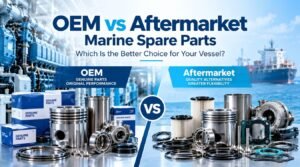
While OEM components are generally associated with original manufacturer specifications and established quality standards, aftermarket parts can offer greater flexibility, competitive pricing and wider sourcing options.
However, the lowest purchase price does not always translate into the best long-term value. Factors such as compatibility, operating conditions, component quality, availability and supplier reliability should all be considered before making a decision.
In this guide, we explore the differences between OEM and aftermarket marine spare parts, their respective advantages and limitations, and the key factors to consider when selecting components for your vessel.
1. What Are OEM Marine Spare Parts?
OEM stands for Original Equipment Manufacturer. OEM marine spare parts are components produced by the original equipment manufacturer or supplied through its authorised parts network for specific marine engines, machinery and equipment.
These parts are designed to meet the technical specifications and performance requirements established by the original equipment manufacturer.
Key Characteristics of OEM Spare Parts
Manufacturer specifications: Designed to meet the original equipment’s specified dimensions, materials and performance requirements.
Compatibility: Intended for the equipment models and applications specified by the manufacturer.
Quality assurance: Supplied under the manufacturer’s established quality control and inspection processes.
Traceability: Often supported by manufacturer part numbers, documentation and supply-chain traceability.
Technical support: May provide access to manufacturer technical assistance and warranty support, subject to applicable terms.
Advantages of OEM Marine Parts
OEM components can be particularly valuable for critical machinery, specialised equipment and applications where strict manufacturer specifications must be maintained.
They can help reduce compatibility concerns and provide greater confidence when replacing components in complex marine systems.
However, OEM parts may come with higher purchase costs and longer procurement lead times, depending on the manufacturer, location and availability.
2. What Are Aftermarket Marine Spare Parts?
Aftermarket marine spare parts are components manufactured by companies other than the original equipment manufacturer. These components are designed to replace original parts while meeting the required functional and technical specifications of the equipment.
The aftermarket industry includes established manufacturers producing high-quality replacement components, as well as smaller suppliers offering alternative solutions for different marine applications.
Depending on the manufacturer, aftermarket parts may be designed to meet or match the specifications of original components. However, quality, materials, manufacturing standards and compatibility can vary significantly between suppliers.
Key Characteristics of Aftermarket Spare Parts
Multiple manufacturers: Available from a wide network of independent manufacturers and suppliers.
Competitive pricing: Often offer more economical alternatives to original manufacturer parts.
Wider sourcing options: Provide additional procurement choices, particularly when OEM parts have long lead times.
Technical compatibility: Quality aftermarket components are designed for specific equipment models and applications.
Variable quality standards: Product quality and documentation depend on the manufacturer and supplier.
Advantages of Aftermarket Marine Parts
Aftermarket components can offer considerable advantages when sourced from reputable manufacturers.
They can help reduce maintenance costs, improve procurement flexibility and provide alternatives when original parts are unavailable or difficult to source.
For vessels operating across different ports and regions, access to reliable aftermarket suppliers can also help minimise equipment downtime.
However, it is important to verify the manufacturer’s reputation, material specifications, technical compatibility and quality documentation before purchasing.
3. OEM vs Aftermarket Marine Spare Parts: Key Differences
Both OEM and aftermarket components have a place in marine maintenance and procurement. The right choice depends on the application, equipment requirements, operating conditions and available budget.
Here is a comparison of the major factors to consider.
| Comparison | OEM Spare Parts | Aftermarket Spare Parts |
|---|---|---|
| Manufacturer | Original equipment manufacturer or authorised network | Independent manufacturers |
| Specifications | Based on original manufacturer specifications | Depends on manufacturer and product |
| Compatibility | Intended for specified equipment models | Must be verified against equipment specifications |
| Quality control | Manufacturer’s established quality processes | Varies between manufacturers |
| Pricing | Generally higher | Often more competitive |
| Availability | Depends on OEM stock and distribution | Multiple sourcing options may be available |
| Documentation | Manufacturer documentation and traceability | Depends on supplier and manufacturer |
| Warranty | Subject to OEM warranty terms | Subject to supplier or manufacturer’s warranty |
An important consideration is that aftermarket does not automatically mean inferior quality. Equally, a lower purchase price should never be the only reason for selecting a replacement component.
The focus should always be on verified quality, compatibility and suitability for the intended application.
4. When Should You Choose OEM Marine Spare Parts?
OEM components are particularly suitable for applications where precise engineering specifications, manufacturer support and equipment integrity are essential.
Consider choosing OEM parts in the following situations:
Critical Engine Components
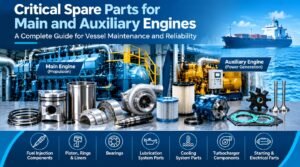
Components such as fuel injection equipment, cylinder liners, pistons, crankshaft bearings and other critical engine parts require careful attention to manufacturer specifications and operating tolerances.
Safety-Critical Equipment
For equipment associated with vessel safety, fire protection, emergency systems and other regulated applications, always follow applicable statutory requirements, equipment approvals and manufacturer recommendations.
Specialised Marine Machinery
Certain propulsion systems, auxiliary engines and specialised machinery may require components specifically designed and approved for particular equipment configurations.
Warranty and Manufacturer Requirements
Where equipment warranty conditions or manufacturer instructions specify particular replacement parts, using the recommended components can help maintain compliance with those requirements.
5. When Are Aftermarket Marine Spare Parts a Good Choice?
Aftermarket components can be an effective alternative when their technical suitability and quality have been properly established.
They are worth considering in the following situations:
Routine Maintenance
For suitable filters, seals, gaskets and other routine replacement components, reputable aftermarket alternatives may offer good value.
Cost-Conscious Procurement
When managing maintenance budgets across multiple vessels, competitively priced aftermarket components can help control operating expenses without compromising required performance.
Limited OEM Availability
When original parts have extended delivery times, a technically verified aftermarket alternative may help reduce maintenance delays.
Non-Critical Applications
For components that do not compromise essential safety or machinery performance, suitable aftermarket products can provide additional procurement flexibility.
The important factor is to select products from established manufacturers with appropriate technical documentation and a reliable supply history.
6. Five Important Checks Before Purchasing Marine Spare Parts
Regardless of whether you choose OEM or aftermarket components, a few essential checks can help prevent costly procurement mistakes.
1. Verify the Equipment Model and Serial Number
Always identify the exact engine or machinery model, including its serial number and configuration. Even equipment from the same manufacturer may have different component requirements depending on the production series.
2. Confirm the Correct Part Number
Check the original part number and any approved replacement or cross-reference numbers. Do not rely solely on visual similarity when identifying replacement components.
3. Check Technical Specifications
Verify dimensions, material grades, operating pressure, temperature limits and other relevant technical specifications. These details are particularly important for engine and propulsion system components.
4. Request Quality Documentation
Depending on the component and application, request relevant material certificates, inspection reports, conformity documentation, manufacturer details and applicable marine approvals.
5. Evaluate the Supplier's Reliability
Choose suppliers who can provide accurate product information, dependable delivery schedules, traceability and after-sales assistance.
A reliable supplier can make a significant difference, particularly when sourcing specialised marine components or managing urgent maintenance requirements.
7. The Importance of Choosing the Right Marine Spare Parts Supplier
Selecting the right spare part is only one part of the procurement process. Finding a dependable supplier is equally important.
Marine spare parts procurement often involves tight schedules, multiple manufacturers, international shipping requirements and varying equipment specifications.
An experienced marine spare parts supplier should be able to assist with:
Identifying components using equipment details and original part numbers.
Sourcing genuine OEM and suitable aftermarket alternatives.
Providing competitive quotations and availability information.
Coordinating international procurement and delivery.
Supporting customers with product documentation and technical enquiries.
Working with a dependable supplier can simplify procurement, improve planning and help reduce unnecessary vessel downtime.
Conclusion: Making the Right Choice for Your Vessel
There is no universal answer to whether OEM or aftermarket marine spare parts are better. Both options can serve important roles in vessel maintenance and machinery management.
OEM parts offer the advantage of original manufacturer specifications and established support networks, while quality aftermarket components can provide competitive pricing, additional sourcing options and greater procurement flexibility.
The best decision comes from evaluating each component individually, considering its application, technical requirements, quality documentation, availability and total cost of ownership.
Ultimately, the objective should not simply be to purchase the cheapest available component, but to ensure reliable equipment performance, safe vessel operations and long-term value.
Looking for Reliable Marine Spare Parts?
At NICO Marine, we understand the importance of dependable spare parts sourcing for vessels and offshore operations. Whether you are looking for OEM components or quality aftermarket alternatives, our experienced team can help you explore suitable sourcing options.