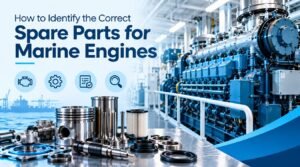

Marine engines operate under demanding conditions, and every component plays an important role in the safe and reliable operation of a vessel. Selecting the correct spare parts is therefore essential to maintaining engine performance, preventing unexpected breakdowns and reducing costly vessel downtime.
However, identifying the right marine engine spare part is not always straightforward. Different engine models may use components that look similar but have different specifications, dimensions or performance requirements. Ordering an incorrect part can lead to delays, additional costs and, in some cases, equipment damage.
Whether you are a shipowner, chief engineer, technical superintendent or marine procurement professional, understanding how to identify the correct spare parts can make the purchasing process more efficient and reliable.
1. Identify the Engine Manufacturer and Model
The first step is to establish the exact identity of the engine for which the spare part is required.
Record the following information wherever available:
Engine manufacturer and brand
Engine model and type designation
Engine serial number
Engine number or equipment identification number
Applicable version or configuration
This information can usually be found on the engine nameplate, equipment documentation or manufacturer’s records.
It is particularly important for vessels with multiple engines or auxiliary machinery, as similar equipment may have different configurations.
Tip: Never rely on the engine brand alone. The exact model and serial number can make a significant difference when identifying compatible components.
2. Check the OEM Part Number
The Original Equipment Manufacturer (OEM) part number is one of the most reliable references for identifying a marine engine spare part.
Where possible, obtain the part number from:
The manufacturer’s spare parts catalogue
The engine’s technical manual
The approved parts list
Previous purchase records or supplier invoices
Manufacturer-approved electronic parts databases
Before placing an order, verify that the part number corresponds to the specific engine model and serial number.
Be careful when using old invoices or historical records. Manufacturers may supersede or revise part numbers, so the current applicability should be confirmed.
3. Consult the Engine Spare Parts Catalogue
A manufacturer’s spare parts catalogue provides detailed information about the components used in a particular engine.
Depending on the manufacturer and engine type, the catalogue may include exploded diagrams, component descriptions, part numbers, assembly references and applicable engine configurations.
Use the catalogue to confirm the exact component and its position within the assembly.
For example, when ordering a fuel injection component, the catalogue may help distinguish between individual injectors, nozzle assemblies, seals and related fittings.
If the correct component cannot be identified from the available documentation, consult the engine manufacturer or an authorised technical representative before ordering.
4. Verify Dimensions and Technical Specifications
When a part number is unavailable or uncertain, physical dimensions and technical specifications can provide useful supporting information. However, visual similarity alone is not sufficient to establish compatibility.
Depending on the component, verify details such as:
Length, diameter and overall dimensions
Thread type, pitch and connection sizes
Material and construction
Pressure and temperature ratings
Electrical ratings and connector specifications
Sealing arrangement and mounting configuration
Required tolerances and performance specifications
These checks are especially important for bearings, gaskets, seals, filters, valves, pumps and other precision components.
Important: Dimensional checks should support identification, not replace manufacturer documentation or engineering approval where these are required.
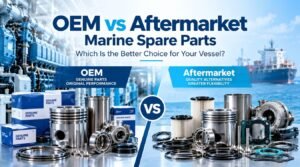
5. Understand OEM, Genuine and Aftermarket Parts
Marine engine components may be available through different supply channels. Understanding the differences helps buyers make informed decisions.
Genuine OEM parts: Parts supplied under the engine or equipment manufacturer’s own brand and supply arrangements.
OEM-manufactured parts: Components manufactured by an original equipment manufacturer, which may be supplied through different channels. Confirm the manufacturer’s identity, specification and intended application rather than relying on the term alone.
Aftermarket replacement parts: Components supplied by independent manufacturers or distributors. These may be suitable alternatives when their specifications, quality and compatibility have been properly verified.
When considering an alternative, check the applicable technical requirements, documentation, traceability, warranty conditions and any vessel, class or regulatory restrictions. For critical engine components, obtain the necessary engineering or manufacturer approval.
The lowest purchase price should not be the only deciding factor. Reliability, suitability, delivery time and the consequences of a component failure should also be considered.
6. Confirm Compatibility Before Placing the Order
Before finalising a purchase, cross-check all available information.
Confirm that the proposed spare part:
Matches the required part number or an approved replacement reference
Is compatible with the engine model and serial number
Meets the required technical specifications
Is suitable for the intended engine position or assembly
Includes the necessary seals, fittings or associated components, where applicable
Meets applicable documentation and certification requirements
If a part number has been superseded, request confirmation of the replacement reference and its applicability to the specific engine.
For complex or critical components, written confirmation from a qualified technical source can help prevent costly procurement errors.
7. Provide Complete Information When Requesting a Quotation
A clear Request for Quotation (RFQ) helps marine suppliers identify the correct component and respond more efficiently.
Whenever possible, include:
Vessel name and equipment location
Engine manufacturer, model and serial number
Required part description and part number
Quantity required
Photographs or catalogue extracts, if available
Required delivery location and date
Documentation or certification requirements
Whether the request permits approved alternatives
If the part number is unknown, provide the engine details, a clear description and relevant photographs. A qualified supplier may then be able to assist with identification or direct the enquiry to the appropriate technical source.
Providing complete information at the beginning can reduce unnecessary correspondence and help avoid ordering the wrong component.
8. Plan Critical Spare Parts in Advance
Correct identification is only one part of effective marine spare parts management. Availability is equally important.
Ship operators should review maintenance schedules, equipment criticality, consumption history and manufacturer recommendations to determine which components need to be stocked.
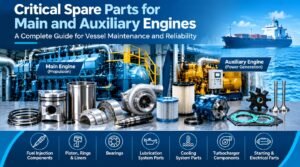
Critical spares may include selected filters, seals, bearings, fuel system components and other items identified by the vessel’s maintenance plan and risk assessment.
Maintain accurate inventory records, including part numbers, quantities, storage locations and approved replacement references. Review these records regularly, especially before planned maintenance, major overhauls and dry-docking.
Effective planning can reduce emergency purchasing, minimise delays and improve operational readiness.
Common Mistakes to Avoid
When identifying marine engine spare parts, avoid these common procurement errors:
Ordering based only on the engine brand.
Assuming that parts with similar appearances are interchangeable.
Using outdated part numbers without checking their current status.
Ignoring engine serial numbers and configuration differences.
Selecting aftermarket parts without verifying their suitability.
Omitting technical specifications from quotation requests.
Waiting until a component fails before checking availability.
A structured identification and verification process helps reduce these risks.
Conclusion
Identifying the correct spare parts for marine engines requires more than matching a product description. Engine model and serial number verification, accurate part references, manufacturer documentation and technical compatibility checks all contribute to a reliable purchasing decision.
By providing complete equipment details, consulting appropriate technical documentation and working with knowledgeable marine supply partners, shipowners and technical teams can reduce procurement errors and help keep vessels operating efficiently.
Looking for marine engine spare parts?
At NICO Marine, we understand the importance of dependable spare parts sourcing for vessels and offshore operations. Whether you are looking for OEM components or quality aftermarket alternatives, our experienced team can help you explore suitable sourcing options.