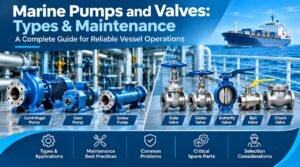

Marine vessels rely on an extensive network of pumps and valves to maintain essential operations. From engine cooling and fuel transfer to ballast management, bilge drainage and firefighting, these components play a critical role in vessel performance, safety and operational reliability.
A failure in a pump or valve can disrupt machinery operations, affect vessel efficiency and potentially create serious safety or environmental risks.
Understanding the different types of marine pumps and valves, their applications and proper maintenance requirements is therefore essential for marine engineers, ship operators and technical procurement teams.
This guide explores the major types of pumps and valves used onboard vessels, their functions and the maintenance practices that help ensure reliable operation.
1. Understanding the Role of Marine Pumps and Valves
Pumps and valves work together to control the movement of liquids throughout a vessel’s various systems.
Marine Pumps
Pumps are mechanical devices used to transfer liquids, increase fluid pressure and maintain circulation within onboard systems.
Common applications include:
Fuel transfer and supply
Lubricating oil circulation
Engine cooling water circulation
Ballast water operations
Bilge water removal
Firefighting systems
Freshwater and seawater distribution
Marine Valves
Valves regulate, control, isolate or redirect fluid flow through pipelines.
They help engineers manage pressure, prevent backflow, isolate equipment during maintenance and control the distribution of liquids across different machinery systems.
Both components must be correctly selected, installed and maintained to ensure efficient vessel operations.
2. Types of Marine Pumps and Their Applications
Different pump designs are used onboard depending on the liquid being handled, required flow rate, operating pressure and system requirements.
A. Centrifugal Pumps
Centrifugal pumps are among the most widely used pumps in marine applications. They use a rotating impeller to transfer energy to the liquid, creating flow and pressure.
Common applications:
Seawater cooling systems
Freshwater circulation
Ballast systems
Firefighting systems
General service operations
Maintenance considerations:
Inspect impellers for corrosion, erosion and damage.
Check mechanical seals for leakage.
Monitor bearing condition and lubrication.
Inspect pump casing for corrosion.
Monitor vibration, noise and operating temperature.
Check suction conditions to prevent cavitation.
B. Gear Pumps
Gear pumps are positive displacement pumps that use rotating gears to move liquids through the pump casing. They are particularly suitable for transferring viscous fluids.
Common applications:
Fuel oil transfer
Lubricating oil circulation
Hydraulic oil systems
Diesel oil supply arrangements
Maintenance considerations:
Inspect gears for wear and damage.
Check clearances according to manufacturer specifications.
Monitor operating pressure.
Inspect seals and bearings.
Ensure suction strainers are clean.
Check for abnormal noise and leakage.
C. Screw Pumps
Screw pumps use one or more rotating screws to move liquid smoothly through the pump. They are commonly used where continuous flow and relatively low pulsation are important.
Common applications:
Fuel oil transfer
Heavy fuel oil supply
Lubricating oil systems
Hydraulic applications
Maintenance considerations:
Inspect screw elements for wear.
Check shaft seals and bearings.
Monitor pressure and discharge flow.
Ensure adequate lubrication.
Avoid dry running unless the pump is specifically designed for it.
Monitor vibration and abnormal operating noise.
D. Reciprocating Pumps
Reciprocating pumps use pistons or plungers moving within cylinders to transfer liquid. They are suitable for applications requiring relatively high pressure and controlled flow.
Common applications:
High-pressure water systems
Boiler feed applications, where specified
Dosing and chemical injection systems
Specialised hydraulic applications
Maintenance considerations:
Inspect piston or plunger assemblies.
Check suction and discharge valves.
Examine packing and seals.
Monitor pressure fluctuations.
Inspect connecting rods and associated components.
Verify pressure relief arrangements.
E. Submersible Pumps
Submersible pumps operate while immersed in the liquid being pumped. Their motor and pump assembly are designed for the intended submerged operating conditions.
Common applications:
Bilge drainage
Sewage and wastewater handling
Drainage operations
Certain ballast and utility applications
Maintenance considerations:
Inspect electrical cables and connections.
Check seals and insulation integrity.
Clean intake screens.
Inspect impellers for blockage.
Check motor temperature and operating current.
Follow the manufacturer’s requirements for immersion and dry-running protection.
3. Types of Marine Valves and Their Applications
Marine valves are available in different designs depending on the function, operating pressure, fluid characteristics and pipeline requirements.
A. Gate Valves
Gate valves use a sliding gate to open or close the flow passage. They are generally used for isolation rather than flow regulation.
Common applications:
Seawater pipelines
Ballast systems
General service lines
Fuel and freshwater isolation arrangements, where suitable
Maintenance considerations:
Inspect the valve stem and threads.
Check gland packing for leakage.
Operate the valve periodically as appropriate.
Inspect seating surfaces for wear.
Ensure the valve reaches its fully open or closed position.
B. Globe Valves
Globe valves are designed to regulate and control fluid flow. Their internal construction allows flow to be adjusted more effectively than with a conventional gate valve.
Common applications:
Steam systems
Cooling water control
Fuel and oil systems
Pressure and flow regulation
Maintenance considerations:
Inspect the valve disc and seat.
Check stem movement.
Inspect packing and sealing arrangements.
Monitor for leakage.
Check for erosion or damage to internal components.
C. Butterfly Valves
Butterfly valves use a rotating disc to regulate or isolate flow within a pipeline. They are compact, relatively lightweight and commonly used in larger-diameter marine pipelines.
Common applications:
Ballast systems
Seawater cooling pipelines
Fire main systems
General service pipelines
Maintenance considerations:
Inspect the disc and seat for wear.
Check the shaft and operating mechanism.
Inspect actuator operation.
Verify tight shut-off performance.
Check for corrosion and deposits.
D. Ball Valves
Ball valves use a rotating ball with a bore through its centre to control fluid flow. They provide quick operation and effective isolation when correctly selected.
Common applications:
Fuel lines
Hydraulic systems
Freshwater distribution
Compressed air systems
General utility services
Maintenance considerations:
Check for external leakage.
Inspect seals and seats.
Verify smooth operation.
Examine the handle or actuator.
Avoid forcing a seized valve.
E. Check Valves (Non-Return Valves)
Check valves allow fluid to flow in one direction while preventing reverse flow. They operate automatically in response to flow and pressure conditions.
Common applications:
Pump discharge lines
Bilge systems
Cooling water circuits
Fuel and freshwater systems
Maintenance considerations:
Inspect the disc or moving closure element.
Check spring condition where fitted.
Remove accumulated deposits.
Verify correct closing operation.
Inspect seating surfaces for leakage.
F. Safety and Relief Valves
Safety and relief valves protect equipment and pipelines against excessive pressure. They are particularly important in systems where pressure must remain within defined operating limits.
Common applications:
Boilers and steam systems
Pressure vessels
Compressed air systems
Hydraulic installations
Other pressurised machinery systems
Maintenance considerations:
Check calibration and certification requirements.
Inspect for leakage and corrosion.
Verify set pressure through approved testing procedures.
Ensure discharge arrangements are unobstructed.
Follow applicable statutory and manufacturer requirements.
4. Common Problems Affecting Marine Pumps and Valves
Even well-designed marine equipment can experience operational problems due to continuous use, corrosion, contamination and inadequate maintenance.
Some common issues include:
1. Cavitation
Cavitation occurs when local pressure within a pump falls below the liquid’s vapour pressure, forming vapour bubbles that subsequently collapse. It can cause vibration, noise, impeller damage and reduced pump performance.
2. Mechanical Seal Leakage
Worn or damaged mechanical seals can result in liquid leakage and reduced system reliability.
3. Corrosion and Erosion
Seawater exposure, fluid contamination and unsuitable materials can accelerate corrosion and erosion of pump and valve components.
4. Bearing Failure
Inadequate lubrication, contamination, misalignment and excessive vibration can contribute to premature bearing failure.
5. Blocked Filters and Strainers
Debris and deposits can restrict flow, increase suction losses and affect pump performance.
6. Valve Seat Leakage
Damaged seating surfaces or accumulated deposits can prevent valves from closing properly.
7. Excessive Vibration and Noise
Misalignment, worn bearings, cavitation, loose foundations and hydraulic problems can contribute to abnormal vibration.
Identifying these problems early helps reduce the likelihood of major equipment failures.
5. Best Practices for Marine Pump and Valve Maintenance
A structured maintenance programme helps extend equipment service life and reduce unexpected breakdowns.
Key practices include:
Routine inspections: Check pumps, valves, pipelines and connections for visible damage, corrosion and leakage.
Performance monitoring: Record operating pressure, flow, temperature, current and vibration where applicable.
Lubrication: Follow recommended lubrication intervals and use the specified lubricants.
Seal inspection: Monitor mechanical seals, gaskets and packing for deterioration.
Cleaning: Remove deposits and clean filters and strainers at recommended intervals.
Alignment checks: Verify pump and motor alignment according to manufacturer specifications.
Periodic testing: Test standby pumps, emergency arrangements and critical valves as required.
Spare parts management: Maintain suitable stocks of seals, bearings, gaskets, impellers and other critical replacement components.
Maintenance should always follow the equipment manufacturer’s instructions and the vessel’s planned maintenance system.
Before carrying out maintenance, equipment should be safely isolated, depressurised and drained as applicable, with appropriate lockout/tagout procedures followed.
6. How to Select the Right Marine Pumps and Valves
Choosing suitable equipment is essential for reliable and efficient vessel operations. Consider the following factors before purchasing replacement equipment:
1. Application and Duty Requirements
Identify the system in which the pump or valve will operate and its intended function.
2. Flow Rate and Operating Pressure
Confirm the required flow rate, discharge pressure and operating range.
3. Fluid Characteristics
Consider fluid viscosity, temperature, corrosiveness, contamination and the presence of solids.
4. Material Compatibility
Select suitable materials for the fluid and operating environment, particularly in seawater applications.
5. Dimensions and Connections
Verify pipe sizes, flange standards, pressure ratings, installation dimensions and connection arrangements.
6. Manufacturer and Model Identification
Confirm the original equipment manufacturer, model number, serial number and applicable part specifications.
7. Certification and Compliance
Check applicable marine, classification, statutory and system-specific requirements.
Selecting equipment based only on physical appearance or nominal size can result in poor performance or installation problems.
7. Common Spare Parts for Marine Pumps and Valves
Keeping suitable replacement components available can reduce maintenance delays and equipment downtime.
| Equipment | Important Spare Parts |
|---|---|
| Centrifugal pumps | Impellers, mechanical seals, bearings, wear rings |
| Gear pumps | Gears, shafts, bearings, seals |
| Screw pumps | Screw elements, bearings, mechanical seals |
| Reciprocating pumps | Pistons, plungers, packing, valve assemblies |
| Submersible pumps | Impellers, seals, bearings, electrical components |
| Gate valves | Wedges, stems, gland packing, gaskets |
| Globe valves | Discs, seats, stems, packing |
| Butterfly valves | Discs, seats, shafts, seals |
| Ball valves | Balls, seats, stems, sealing kits |
| Check valves | Discs, springs, hinges, seats |
The actual spare parts requirements depend on the equipment design, manufacturer and maintenance history.
8. Choosing a Reliable Marine Pumps and Valves Supplier
Reliable sourcing is important for maintaining vessel readiness and minimising machinery downtime.
When selecting a marine equipment supplier, consider:
Product availability and sourcing capabilities.
Technical knowledge of marine equipment.
Correct product identification and compatibility.
Quality assurance and supporting documentation.
Compliance with applicable specifications and certification requirements.
Competitive pricing and realistic delivery schedules.
Access to suitable OEM and aftermarket alternatives.
Working with an experienced supplier can help marine procurement teams identify the right products and avoid costly ordering errors.
Conclusion
Marine pumps and valves are essential components of almost every vessel’s machinery and fluid-handling systems. Understanding their different types, applications and maintenance requirements helps marine engineers maintain system reliability, improve equipment performance and reduce unexpected downtime.
By implementing preventive maintenance, monitoring equipment condition, maintaining critical spare parts and sourcing technically suitable replacements, vessel operators can ensure safer and more efficient marine operations.
Looking for marine pumps and valves?
At NICO Marine, we understand the importance of dependable spare parts sourcing for vessels and offshore operations. Whether you are looking for OEM components or quality aftermarket alternatives, our experienced team can help you explore suitable sourcing options