
Marine engines are the backbone of vessel operations. The main engine provides propulsion, while auxiliary engines support essential onboard systems, including electrical power generation and other operational requirements. An unexpected engine failure can result in costly downtime, disrupted schedules, expensive repairs and potential safety risks.
One of the most effective ways to minimise these risks is to maintain an appropriate inventory of critical marine engine spare parts.
But which spare parts should vessels prioritise? How do main engine requirements differ from auxiliary engine requirements? And how can ship operators ensure that the right components are available when they are needed?
This guide explores the essential spare parts for marine main and auxiliary engines and explains how to develop an effective onboard inventory strategy.
1. Understanding the Difference Between Main and Auxiliary Engine Spares
Although both engines operate on similar diesel-engine principles, their functions and maintenance requirements differ.
Main Engine
The main engine is primarily responsible for driving the vessel’s propulsion system. Its failure can directly affect vessel manoeuvrability, schedules and operational safety.
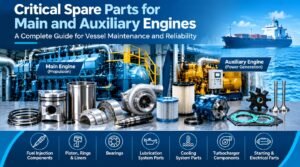
Critical main engine spares generally include components associated with:
Fuel injection and combustion systems
Cylinder assemblies and piston mechanisms
Crankshaft and bearing arrangements
Lubrication systems
Cooling water systems
Turbocharging and air intake systems
Exhaust valve mechanisms
Auxiliary Engines
Auxiliary engines typically drive generators that supply electrical power to essential vessel systems. Their availability is important for maintaining lighting, navigation equipment, pumps, control systems and other electrical loads.
Critical auxiliary engine spares commonly include:
Fuel filters and injection components
Oil and cooling water filters
Fuel and lubricating oil pumps
Cylinder head components
Piston rings and bearings
Starting system components
Sensors, switches and control components
Alternator-related components, where applicable
The exact requirements depend on engine design, manufacturer recommendations, operating conditions and the vessel’s machinery configuration.
2. Critical Spare Parts for Marine Main Engines
The following components are particularly important when planning a main engine spare parts inventory.
A. Fuel Injection Components
Fuel injection systems are responsible for delivering the correct quantity of fuel at the required pressure and timing.
Important spare parts include:
Fuel injectors and nozzles
Fuel injection pumps
Fuel pump elements and delivery valves
High-pressure fuel pipes and associated seals
Fuel system filters
Worn or defective injection components can cause poor combustion, increased fuel consumption, excessive exhaust temperatures and reduced engine performance.
B. Piston Rings, Liners and Cylinder Components
The piston and cylinder assembly plays a vital role in maintaining compression and converting combustion energy into mechanical power.
Important spares include:
Piston rings
Cylinder liners
Piston crowns
Piston cooling components
Cylinder head gaskets
Cylinder head valves and associated components
These components are subject to continuous thermal and mechanical stresses. Their condition has a direct impact on engine efficiency and reliability.
C. Main Bearings and Connecting Rod Bearings
Bearings support rotating and reciprocating engine components while maintaining the required clearances and lubrication film.
Critical bearing spares may include:
Main bearing shells
Crankpin bearing shells
Thrust bearing components
Connecting rod bearing components
Bearing bolts and specified fasteners
Bearing damage can lead to serious engine failure. Correct identification, clearances, installation procedures and lubrication are essential when replacing these components.
D. Lubrication System Components
The lubrication system reduces friction, controls wear and helps remove heat from moving engine components.
Recommended spare categories include:
Lubricating oil filters
Oil pump components
Filter elements
Pressure regulating valves
Seals and gaskets
Oil cooler components
Maintaining the lubrication system is particularly important for protecting bearings, crankshafts, pistons and other moving parts.
E. Cooling System Components
Marine engines operate under demanding thermal conditions. An effective cooling system helps maintain safe operating temperatures.
Important spares include:
Freshwater and seawater pump components
Impellers, where fitted
Thermostatic valves
Heat exchanger gaskets
Cooling system seals
Temperature sensors
Relevant hoses and connections
Failure of cooling system components can result in overheating, reduced engine performance and potentially severe mechanical damage.
F. Turbocharger Components
Turbochargers improve engine efficiency by supplying compressed air for combustion.
Depending on the turbocharger design and manufacturer recommendations, important spare parts may include:
Bearings and bearing kits
Sealing components
Nozzle rings
Compressor and turbine-related components
Filters and gaskets
Turbocharger maintenance should follow the manufacturer’s inspection intervals and servicing procedures.
3. Critical Spare Parts for Auxiliary Engines
Auxiliary engines are essential for maintaining reliable electrical power onboard. Their spare parts inventory should reflect the generator’s importance, operating hours, redundancy arrangements and availability of alternative power sources.
A. Fuel System Spares
Fuel system reliability is essential for uninterrupted generator operation.
Maintain appropriate spares such as:
Fuel injectors
Fuel injection pump components
Fuel filters
Fuel transfer pump components
Fuel system seals and gaskets
B. Cylinder Head and Combustion Components
These components are exposed to repeated combustion pressures and high temperatures.
Important spare categories include:
Inlet and exhaust valves
Valve guides and seats
Piston rings
Cylinder head gaskets
Injector nozzles
Valve springs and related components
C. Bearings and Engine Internals
Auxiliary engines also require appropriate replacement components for their rotating assemblies.
These may include:
Main bearings
Connecting rod bearings
Piston rings
Oil seals
Crankshaft-related components
The correct specifications and clearances must always be confirmed before ordering.
D. Starting and Electrical Components
Reliable starting capability is particularly important when auxiliary generators are required to restore or maintain electrical power.
Depending on the engine and generator arrangement, critical spares may include:
Starter motor components
Starting solenoids
Starting air system valves, where fitted
Battery-related connections and components
Speed sensors
Temperature and pressure sensors
Alternator voltage regulator (AVR)
Relevant electrical relays and control components
The electrical inventory should also account for the generator’s specific control and protection system.
4. How to Prioritise Critical Engine Spare Parts
Not every engine component needs to be stocked in large quantities. An effective inventory strategy focuses on the likelihood of failure and the consequences of a component becoming unavailable.
Consider the following factors:
1. Failure Probability
Identify components that experience regular wear, deterioration or frequent replacement during scheduled maintenance.
2. Operational Impact
Prioritise parts whose failure could cause engine shutdown, reduced propulsion capability or loss of essential electrical power.
3. Replacement Lead Time
Specialised marine engine components may have lengthy procurement and delivery periods. Parts with long lead times deserve particular attention.
4. Manufacturer Recommendations
Refer to the engine manufacturer’s spare parts catalogue, maintenance schedule and recommended onboard spare parts list.
5. Vessel Operating Conditions
Consider engine running hours, operating profile, fuel quality, environmental conditions and maintenance history.
6. Redundancy and Fleet Support
The availability of standby generators, alternative propulsion arrangements and compatible spares across a fleet can influence stocking decisions.
5. Common Mistakes in Marine Engine Spare Parts Management
Poor spare parts planning can create unnecessary operational risks.
Some common mistakes include:
Ordering parts without confirming the engine model and serial number.
Selecting components based only on appearance or dimensions.
Overlooking manufacturer part number revisions.
Ignoring the condition and storage requirements of rubber seals and other sensitive components.
Failing to monitor stock levels and procurement lead times.
Keeping excessive quantities of slow-moving components while overlooking critical items.
Using non-approved replacement parts without verifying technical suitability.
Failing to maintain accurate spare parts records.
A structured inventory management process helps prevent these problems and improves maintenance planning.
6. Practical Checklist for Marine Engine Spare Parts Inventory
Ship operators and technical teams can use the following checklist when reviewing their onboard inventory.
| Inspection Area | What to Verify |
|---|---|
| Engine identification | Manufacturer, model and serial number |
| Fuel system | Injectors, pumps and filters |
| Cylinder assembly | Piston rings, liners and gaskets |
| Bearings | Main and connecting rod bearings |
| Lubrication | Oil filters, pumps and seals |
| Cooling | Pump components, valves and gaskets |
| Turbocharger | Relevant service and replacement kits |
| Starting system | Starter and starting air components |
| Electrical system | Sensors, relays and control components |
| Inventory records | Quantity, condition and lead time |
Review this list against the specific engine manufacturer’s recommendations.
7. Choosing the Right Marine Engine Spare Parts Supplier
Selecting a reliable supplier is just as important as maintaining the correct inventory.
Before placing an order, consider:
Technical compatibility: Ensure that the parts match the engine manufacturer, model and serial number.
Quality assurance: Verify the origin, specifications and supporting documentation of the supplied components.
Availability: Check stock availability and realistic delivery schedules.
Product range: Choose suppliers capable of supporting different engine systems and maintenance requirements.
Technical assistance: Reliable product identification support can help prevent costly ordering errors.
OEM components and suitable aftermarket alternatives may both be considered, provided their technical compatibility, quality and approval requirements are verified.
Conclusion
Maintaining the right critical spare parts inventory for main and auxiliary engines is an essential part of effective vessel maintenance and operational planning.
By identifying high-priority components, following manufacturer recommendations, monitoring procurement lead times and working with dependable suppliers, ship operators can reduce the risk of unexpected machinery downtime.
A well-planned spare parts strategy helps protect engine reliability, supports vessel availability and contributes to safer, more efficient marine operations.
By providing complete equipment details, consulting appropriate technical documentation and working with knowledgeable marine supply partners, shipowners and technical teams can reduce procurement errors and help keep vessels operating efficiently.
Looking for marine engine spare parts?
At NICO Marine, we understand the importance of dependable spare parts sourcing for vessels and offshore operations. Whether you are looking for OEM components or quality aftermarket alternatives, our experienced team can help you explore suitable sourcing options.